
When She Speaks
Heart Talk and the Recovery of Reality

1Education is profoundly personal and requires engagement with the whole personality, not just the analytical self-structure. We tend to prioritise the analytical self, but consciousness has evolved into different levels of self-experience. I believe there is one moment every day when our self-experience shifts to a deeper level, a poetic moment. My work has involved paying attention to this moment and encouraged students to language its potential. This has made me understand that the heart is the home of the self. In this essay, I reflect on experiences teaching students in a space that offered nearness to the heart and where I saw their ability to engage in deep reflection. This makes me believe that impulses to this side of the self, the heart side, enable dimensions of human life to re-enter and aid young people to recover voice and vision. But the heart necessitates proximity to others to enter into co-creative states in which we transmit the intelligence of life and the morale to become ourselves. I try to language this work of poiesis and seership when our motive shifts towards being-together. I also draw on work with a student who had goosebumps for the first time in years and upon writers who also dreamt of human nearness.

On that day we spoke and listened to each other often and for a long time – Franz Kafka
Education provides a view of the human self’s possibilities within existence. I have read many personal statements of students seeking admission into higher education and I have come to believe that this is a time in a person’s life when a deeper intent is trying to break free and become active. This is knowable in places within a text where an interior energy seems to be stepping forward. Rather than being led by logic or good behaviour, these places come from longing, desire, and the pain of knowing that this time-bound existence will one day vanish and disappear. Words can communicate the wishes of the soul and infuse writing with a different intent: The intent of the heart (Rawal, 2024). What is the heart trying to do, at the risk of rejection or being misunderstood? I believe the heart is engaged with processes of consciousness development which utilise the possibility of human communication to secure this young person as a thinking being: ‘I am here, this is when I am at my best’. This is about presence, identity, and the inward security that comes through the creative alignment between heart and head. The heart’s motive is not power or status. It is engaged in the exposure of self-material. Psychology has shown that the initiation of the self is a co-created process that cannot proceed without the perception of another human being who mentors this process. The mentor is the person who is asked to provide the agreement that the earth is the destined location of this appearance. The deeper the permission, the deeper the display to be cognised and embodied. On the other hand, a lack of acceptance creates distance between levels of the psyche; self-material falls into unconsciousness and human-made shadow is generated.
The Heart’s Knowing
I have learnt that the moments a young person seeks mentorship are not random. Consciousness has evolved into different levels which interact with each other: Heart and head (Barnard and Teasdale, 1991). It is the activity of the heart that inspires a conversation about purpose. The heart puts the mind into inspiration and it is critical that we participate in this process and encourage the young person that, sooner or later, the heart will speak to align their whole personality to a love orientation towards life. I also believe that this is not the first time this is seeking to happen. Certain impulses recurrently attempt to come into our awareness. Several of my students have reported that when they sat down to meditate after our classes, images from childhood flowed back into their consciousness. Something that seemed lost was returning and inspiring them to be in relationship. Meditation is an activity of the soul that alters boundaries of space and time. It enables images that call us back to ourselves to arise in perception (Jung, 1955). This backward flow towards memories of the future can uncover deeply individual and purposive content given to us by the psyche which contain possibilities for our life. According to Jung, a person cannot rely on concepts alone. He saw the body as a threshold into deeper activities that inform our existence. The heart, more than the head, is the home of the self. It is likely that we regularly experience moments when our intention returns home - to a deeper level - but we block the heart channel and do not establish outward forms for its perceptions and intimations, because the modern psyche has to function within tightly regulated boundaries.
I was reminded that we are clinging to this mode in our work which allows little space for heart content when a student who was averaging first class grades said to me that, despite her success, she felt dissatisfied about her work: She was not in it. ‘What do I think?’ became existential distress. She wanted to clarify what she stood for and where she fit into the degree she was studying. She also wanted to give us the chance to remember her for this, not for her grades. Her striving was being re-directed towards meaning and she set the intention to express more of herself - in a small dose - in her next essay. As she was permitting herself to enter the writing process with this intention, she was meeting sparks of inspiration in the form questions. She decided to include questions as sub-headings to structure her essay in a way that admitted her into her piece and perhaps also an indication of this emerging and unfinished process. She was shocked when the mark returned. She was told she had violated the expected structure by starting paragraphs with questions as sub-headings. This closed off the possibility for a real engagement with her piece. She felt shamed and unsafe. She lost confidence in what was beginning to appear to take part in learning. This student felt forced to send away what had appeared from within, without further investigation, because there was no outer acceptance or curiosity about it. Something had been called to awareness that felt hopeful, only to be repressed again.
When a young person risks to voice ‘themselves’ they are reaching out from a different place of reality where information is transmitted into the heart space and generating meanings that are non-conceptual (Barnard and Teasdale, 1991). The heart receives information from all the senses as well as from the mind level of cognition. We can consciously attune to the heart level of reality and - in this move away from habit consciousness – experience and know deeply. This shift in balance from intellectual to holistic-intuitive knowing is a core process of insight within the heart-mind configuration and relies on opening the attentional field to source information from a wider spectrum of reality and the potential meanings within it. This is a shift towards being which is receptive and gives priority to the ongoing relationship with life in our core. As a result, we experience a different ‘me’ which knows things in relation to or because of information outside of intellectual self-experience. The terrain is deeper than logic and is where we meet what is coming towards us. This encounter begins to point us away from pre-existing identifications and belief structures of youthhood towards the horizons of our life’s opus. Viktor Frankl (2004) believed that when we see reality as it is, we understand that each being is questioned by life to discover its unique responsibility and philosophy of living.
I have seen that young people have a special bond with creation and know that existence demands a more intimate relationship with us. This is not something abstract, it is somatic attunement to transitory possibilites that spring from the ground of life: ‘I am here, this life matters’. It is knowing with heart, a re-discovery of the will to meaning, that subdues pre-dominant power and pleasure principles. I believe students are looking for educators to lead them to the heart and to overcome the forces that are keeping them from doing this, in this decisive stage of their lives. They do not want to be impeded by cultural fixations and appeased by surrogates, no matter how enticing. They want their path.
I just read, the letter, your essays, again and again, convinced that such prose does not exist merely for its own sake, but serves as a signpost on the road to a human being, a road one keeps following (Kafka, 2018).
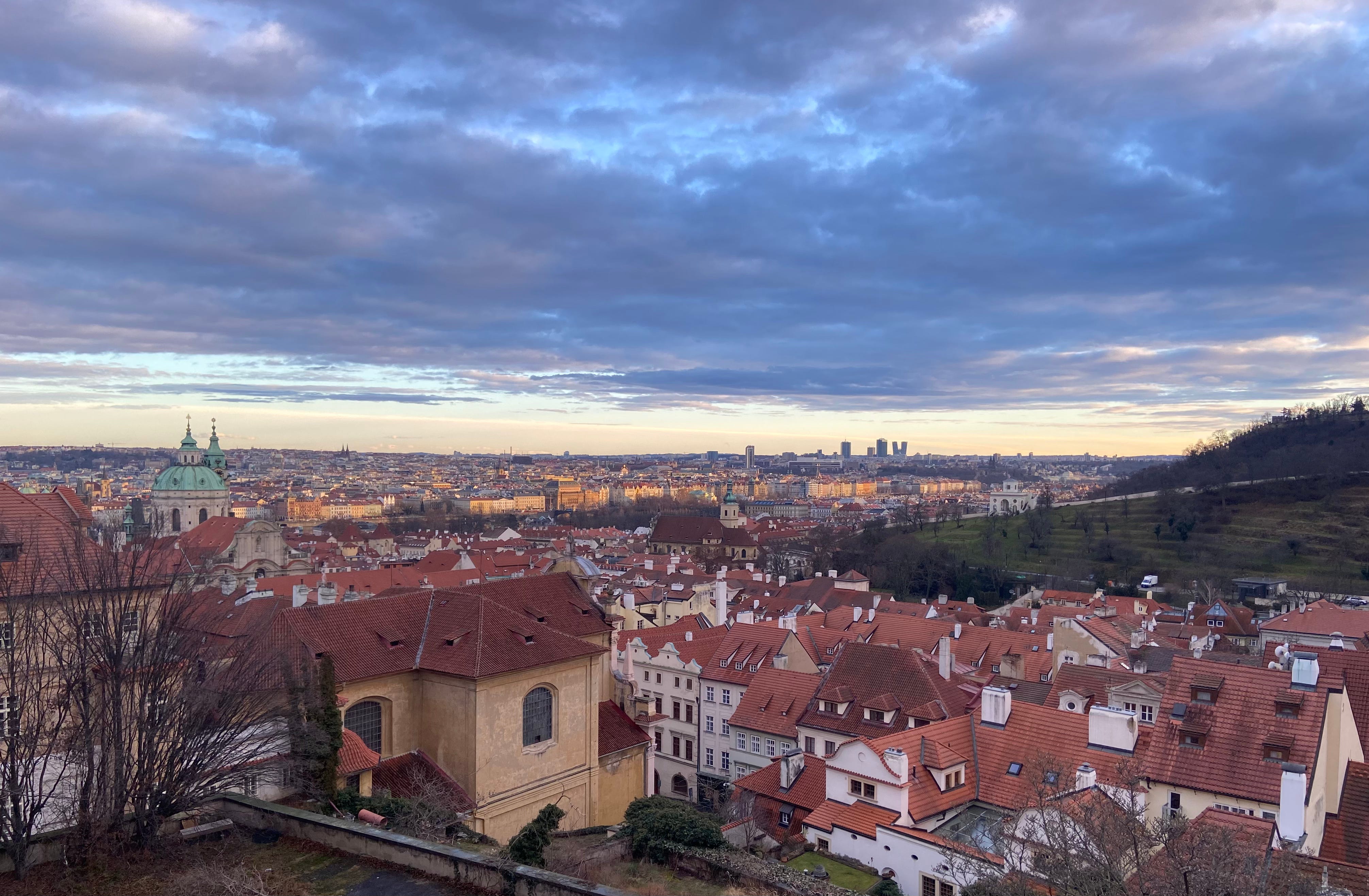
Where is ‘here’?
When we say to a young person ‘I want you here’, we typically mean the intellectual level of our consciousness and the experience of linguistic meanings dominated by the analytical self-structure, often to the extent that anything outside of logical reason is inaccessible because of (over-)thinking. This attentional demand to the intellectually generated reality can become an impenetrable loop and violate existence as an affective, embodied and ensouled being if it is the sole reality we inhabit. And it undermines the possibility for these more subtle realities to become known and authenticated. Sigmund Freud (2006) observed a conflict between the possibilities for and the reality of human expression, which reflected an old and ongoing psychological battle between the human consciousness potential and socio-cultural reality. He recorded that the life of the society had become so strong that the intellectual mode had become accustomed to hiding truths about the self and creating its own order, often refusing to follow impressions that occurred within the field of consciousness or preventing some from being perceived at all. Information or impulses within the human psyche can be filtered out, layered over, or forced back into unconsciousness. Freud highlighted this because he saw that once reality is constricted we begin to do all sorts of things in it, we may even deem noble, without realising that whatever we do effectively maintains a split in the psyche through which dimensions of human life can no longer enter. This reinforces the sense that something is right when actually it is not. It also normalises the deteriotation of the person who lives without their own inner input. Education is part of the historical process that has fractured the human experience within existence and pursued a separate and solidified reality, without the heart. This has diminished the field of existence and our exploration of life within it: Details of life are prone to extinction within the mind that intellectualises. These developments do not speak to the education young people require for a consciousness that includes purpose to be realised. Students who are cut off from the opportunity to do their deep work drop out even if they remain physically present. They withdraw and become extinct in perception.
We have become victims of our own art. We touch people on the outside of their bodies, and they us, but we cannot get at their insides and cannot reveal our insides to them. This is one of the great tragedies of our interiority—it is utterly personal and unrevealable (Becker, 1971).
There is a loss when we no longer connect our possibilities for knowing. We do not respond to others in their fullness and we do not get a real response from them because we tend to see material stuff when we look at each other. There is a depth, but this is not ‘here’. The intellect can name things inconsistent with their nature when interactions are not based on the spectrum of perceivable life. We can force an attunement on the surface of reality when we fail to utilise ways of knowing that perceive beings and admit them into life. Our perception fails to recognise who is in front of us. As one of my students said, ‘I am not the David people think I am.’ The misperception was causing him loneliness. He felt his inner life was atrophying as a result but he also said that it was not worth to make too much of this, because the academic opinion had overwhelming power. He chose to separate ‘himself’ from his academic life in an attempt to fit in until his studies were over. He did not want us near when he was at his best. A being has to be felt and intuited. As contact deepens so does meaning and understanding. When we remain on the periphery, we do not adequately respond to reality and isolate each other.
Developmental psychology has shown that the experience of separation without the possibility of reunion causes anxiety and shame (Tronick, 1998). When we do not find relief from separateness we question our worth. The deepest need might be to overcome separation, but typically educators direct the student’s energy to activities which, ultimately, deplete them, because they are not hosting reality in its fullness. Our training can make students attend in a way that serves our will’s conception of reality, not theirs. I have observed myself endangering the integrity of the heart-mind of students. Because we have inherited an inner loneliness, our interactions can be a reaction to this void. The students can become the focus of this reaction. We need them so we do not have to face our own pain. And we believe as long we think about the student we are serving them. But this means that in order to connect with us, they have to be like us. Even if we have a rotten time together.
Jung (1955) highlighted that we need to stay alert to ‘power over’ and the influence of fantasies of power on our self-experience and on others. Not only does this make it difficult for sensitive people to be with us, but what we offer them can be indifference presented as warmth. The educator would need to feel secure enough to resist these forces that push him below the human level and strong enough to accept the opposition of students who too could have become accustomed to operating in a power-oriented mode and may not understand a different motive. On some level the educator could, consciously or not, lead students away from matters that benefit heart and soul, because of an unaddressed need to be ‘loved’ and its distorting effect on the psyche. I know several students who feel crazy for this reality they are intuiting as natural to them and the journey this would take them on, because reality has been ruptured. They have lost trust in themselves because human connection has been lost.
I reread the Sunday letter, it’s even more frightening than I thought at first. One ought, Milena, to take your face in both hands and look you square in the eye, so that you would see yourself in the eyes of the other person, then you could not even think the kinds of things you wrote there (Kafka, 2018).
Heart Talk: Looking into the Self
In what ways may we have to change to be with a young person in a reality where they know they are not alone and their dream is our dream? I want to speak to the possibility that there is more we can do for each other at the level of eye contact because every conversation can give us more to register if we open our eyes and pay attention until the communication shifts to a deeper level. You will have experienced the possibility for such a shift in conversations, from small towards deep talk. When this happens, we seem to experience an alteration of boundaries while we simultenaously lose awareness of one mode and gain awareness of another. Developmental psychology has shown that relationships that repair the rupture between people involve synchronisation between two embodied consciousnesses. In these exchanges, people are with each other in a stimulus-response interaction only until they enter into dyadicallly expanded states of consciousness that connect them holistically: At affective, embodied, and intellectual levels (Tronick, 1998). In these states, individuals experience themselves embedded in a relational field. The medium of exchange is more complex when people are embedded in such a deep relationship. More information is active and accessible. The synchronisation co-ordinates an attunement and coherence between different levels of reality, linking them into an experience in which the heart-mind is moving and collecting things. There is a talkativeness that goes beyond the cerebral discourse.
The expansion amplifies awareness of the beats, pulses, and vibrations that we transmit into the space between us through the shell of the body. These impulses pass through unconscious channels. In this way, subtle impulses are sent back and forth in the realm of being where deeper emotions and intentions are revealed. We can be present with what is with us and harder to articulate. The in-built tendency to mirror what we receive ensures that we borrow and reflect what is given to us: Pieces of heart and soul. Even though harder to name, there is something essential being shared in these exchanges, like in a favourite piece of music, because we can share freely and deeply. And although this developmental literature focuses on the signifiance of mirroring, what happens in such exchanges is more than mirroring. The other opens a window or door into the self. This corrects separation and indifference, can lead out of fear and stagnation.
Freud reasoned that through implicit communication a potential beginning is intersubjectively amplified into existence. We register these impulses in a form of empathy that allows us to anticipate something about someone before being told: ‘I know your name, even though you are lost’. We can also know things about ourselves because of someone else. Life is becoming visible. These are high probability or revelatory fields. In these fields we are hosting for what is in a person’s heart and self-initiation makes sense.
By the way, did you know that you were my confirmation present? (Kafka, 2018).
The experience of bringing each other to life, back and forth, strenghtens the self. A vertical alignment between head and heart takes place because of the horizontal alignment between people. Eros remains weak until his brother Anteros is born: He is love answered, the echo in Eros’ heart. Where there was a void, there is a signal. Anteros matures an understanding of Eros’ nature: The intention to be a giver and that giving does not diminish. It enhances. We awaken to soul and we make soul in the world. This is a movement towards life and affirms the love orientation within the heart.
Years with students have helped me understand that we create each other through speaking and listening. I have also been alongside my 8-year niece since she was born. I have come to realise that speech – beats, pulses, vibrations, gestures, utterances – are therapeutic sounds of the self. And I have realised that speech is more essential than language, because speech is a generative area of consciousness. It is a carrier of intention and forgotten areas of the self. Speech is the aspect crucially enhanced by another. The listener augments and amplifies the speaker’s capacity. This is why I consider the perfecting of speech to be more important than the perfecting of language in my work. Growing our communication field enhances our capacity to contain and mature these impulses for their exteriorisation. As such, our speech becomes more intentional and revelatory. We can assist others to return to reality in the fullness of being.

When She Speaks
It can take time for a young person to agree to return. I worked with a student once who came to every class of my module. But she never spoke. She sat silently, week after week. It was not apparent whether she was interested or not. In fact, it was not apparent why she was there at all. Some of the students began to ask me after class, ‘Why is she here?’. Her presence influenced the atmosphere. I did not know what to do and whether I should say something, maybe ask her not to come if she could not participate. I had an urge to do this, but I also kept saying to myself: ‘Another week’. I did not want to frighten her away. And while most of the time she was completely still, there were moments her body jerked and her legs bounced. We were together for eleven weeks and the student did not speak, until the penultimate week. At the beginning of the class, her body softened. She reached into her bag for a diary. She opened it, looked around, and read a poem: ‘I am still here’.
She had things to tell us. She felt lead around her so heavy it could pull her into an abyss. But, in this time with us, she also felt goosebumps for the first time in two years. As she read, she pointed to the ground several times: ‘Here, here, here’. She wanted to begin again. Some had tears in their eyes. Her history had been painful and she had cried a lot. But this was not a blame story. Neither was it a survivor story that was extending childhood patterns. She was simply reminding us that we were also made for being sad and for melancholia. More so, she was correcting an early misinterpretation that the absence of love had meant she was not worthy. She was re-writing the first story she ever told. This was an origin story.
Frankl’s study of the will showed that in the process of grieving we often lose the cultural script which was imposed on us, because the pain takes it away. When this reality breaks down, we are left with the longing for something absent and unknown. We can re-gain the script of the heart as our attention is pulled inwards. Frankl stressed that the innermost core of our personality continues to exist, despite everything else in our biography. He suggested that the full personality is not predictable and aspects of our consciousness are composed by factors we are not typically aware of. We can uncover this and come to the possibility of a free act within our consciousness no matter our history. This is the principle of initiation that allows us to begin again.
I have decided that I am an artist. Since deciding this, the creativity has poured smoothly from my spout with a seemingly unlimited source of nourishment. – Student in the class
She was with us now and we were stunned by her maturity. She had waited all this time, perhaps because she knew we would wait for her. How could we give up waiting knowing someone is inside. Yet she had done something critical. She had resisted to merely engage with things that are conceptual, she chose the poetic process to engage with what was actually going on. She wanted to move out of concepts and know who she is. She had resisted what Freud reasoned most people strive for: The activation and acting out of something that ought be held within the psychological sphere for deep content to be extracted and remembered. When she spoke, she spoke consciously. She said she was tired because she was unlived. She had asked to be born and told us why. The poem was mediating between known and unknown. This knowing contained soul and earth substance. We heard her voice. The poem reminded us that sound and rhythm precede the self. The words spoken by her voice had implications beyond them. They were being moved by her heart’s intention. Her voice was recovering and growing this intention. The poem was a story of the self before the self had been lost.
In an essay on love, Freud spoke to an essential element of any psychological work when discussing a particular patient. He said: “…the woman must have her capacity for love, which is invaluable to her but has been impeded by childhood fixations, placed freely at her disposal”. It was evident that the poetic expression was locating and maturing love. It represented a return of the intention to give to this reality which had ignored the heart principle. The poetic expression passes through the heart and can unblock the channel from heart to head. There was room to love again.
A River’s Source
What is the real origin of the self? When we create spaces for the heart a different sense of self arises in our act of being together. This shows me that the self is a potential that depends on what we invest into it. When this potential is informed by our deepest care, it continues to be related to and act toward the whole. We can hear this in the voice. When we listen to someone, we can hear their origins in another level. It is there, the rhythm, the purity, the love. Like a river that is coming from a source and moving towards a destiny. The self begins in the heart space where dreams are held. Love brings this through. Viktor Frankl spoke of love not as a blind force, but an activity that goes into the depths of a person and waters what is in a state of dormancy. Love activates the whole personality. From this place, more becomes possible: Presence, identity, purpose. This produces an affirmation of the self. In doing so, love produces love.
Love is the only way to grasp another human being in the innermost core of his personality. No one can become fully aware of the very essence of another human being unless he loves him. By his love he is enabled to see the essential traits and features in the beloved person; and even more, he sees that which is potential in him, which is not yet actualised but yet ought to be actualised. Furthermore, by his love, the loving person enables the beloved person to actualise these potentialities. By making him aware of what he can be and of what he should become, he makes these potentialities come true (Frankl, 2004).
What do we mean when we say we love? We need to set aside time for this work with young people. We need spaces that go deep into the heart, where it has room to speak and we ponder this capacity, not just the mind. We may have never done this in education. We typically do not reflect into the self, we tend to repeat or re-arrange the knowledge of others. But we would be working with an inherent principle that aims for deeper self-awareness. Freud noted that when the intellect lets go of its need to dominate what may appear in the mind, hidden purposive ideas come to direct and order the stream of ideas. Cognition is encoded in different levels of the psyche. We can gain access to this stream. In these moments of his writing, Freud understood that the disengaged blank screen that only offers interpretations is a bad model for how to be with people. He knew that this task of the creative arising of psychic contents is a two-person meditation, a knowing that requires engaged and genuine nearness. We can run into a wall when we try to look in on our own, because there is a sentinel at the gate, making sure we keep following orders. But when we create relational safety and space, there is a softening and relaxation. The dialogical possibilities that emerge from this offer a deeper experience of subjectivity. The relational intimacy that a person experiences then becomes active within them.
I am convinced that our students experience the cognition of the heart. I recall a student interrupting one of our classes when he felt something he just had to say. He did not care whether it was convenient to voice it or not, neither did he ask for permission. It just needed attention. He said that there was someone he loved and even though he knew that this person loved him too, they were not together. The possibility of love had scared them away from him and there was nothing he could do about it. Why was love frightening? These words came out of the heart. This was his question. He got up from his chair and sat down on the floor. Other students joined him, until they all sat together. They had lost love too. But they were gentle with each other. They were offering and taking in, without taking permanent residence in each other. They were practising nearness and doing the work of multi-level cognition, which necessitates feeling, the imagination, their holding and translation. They were accountable to each other and implementing our work in their life.
What are we going to do with the wrong and when nothing seems right? We are the hosts and the young person wants to become an adult. When we overcome the fear to experience others in ourselves, we realise that some of our knowing is for someone else. We can cognise their inner world and vision. I believe a young person intuitively knows what kind of host a person is and whether they are a willing to accompany them towards their heart. I have seen in my students a willingness to work through the hardest problems of life. Where an analytical person may retreat or give up, they persevere, because the heart creates interconnections between inner and outer realities. Opening our communication field enhances commitment to life.
This may feel threatening because in order to make our interactions more abundant we must lose something. Typically we tend to have a motive behind being with someone else. We may call it service, but if we look, our motive may not be as clear. Our students can help us heal fear, any ill will, and recover the intention to give. As educators, we do not need to pursue all the intellectual knowledge in the world. They understand that. Some enquiries may require us not to be after anything. They may have no other responses than silence, feeling, sensing. They may require us to spend time in the heart space and listen with reverie and reverence to the experience that moves through our relational fields. Something can be enabled to happen when we are here, together, and our communication becomes transparent. To be with another person is hugely challenging. We must prepare ourselves to host the co-creative processes through which the intelligence of life can transmitted. This is an integrity for which we must return to our bodies and regulate our nervous systems.
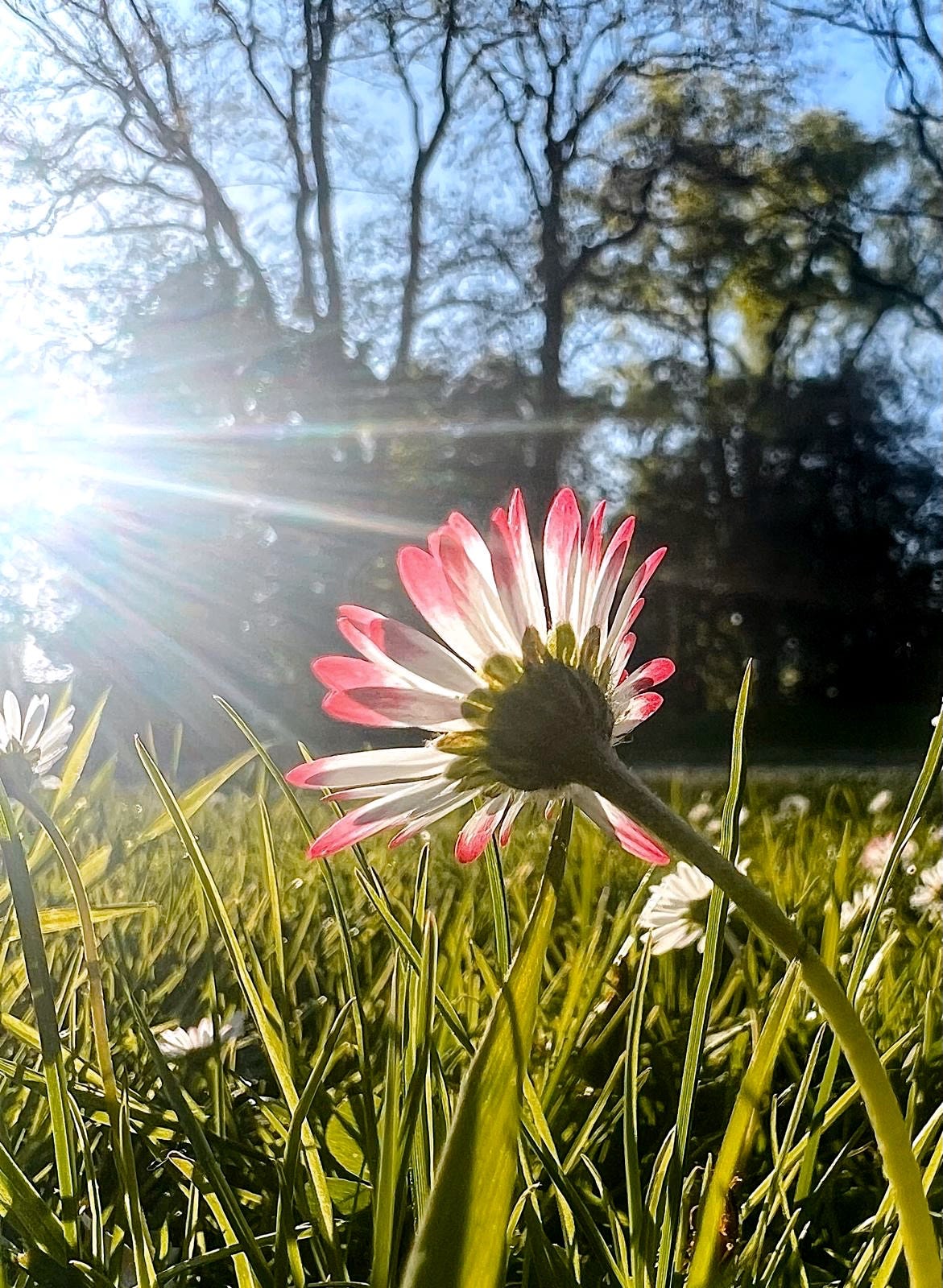
Watering Seeds
Educators have the power of the word because young people want to listen to them. Where words are coming from is important. Typically we do not listen inward and carry out the slow work to enquire whether our words are congruent with our psychological state. We speak, forgetting that our speaking and listening can suffer from lack of content. The student can feel this friction between words and the interior condition of an educator. When we speak without embodiment, there is double talk, and a confusing atmosphere. We communicate an experience of conflict. These words can betray themselves and our students.
If a woman told us she loved flowers, and we saw that she forgot to water them, we would not believe in her ‘love’ for her flowers (Fromm, 1995).
It is not easy to find the heart, to take the time to seek and put together words that come from there. But such words can bring us back and bring about an intense care. They also reach another person in a different way. When we harmonise our communication and our words are rooted in the heart, our language radiates presence: Word and silence make the encounter holistic and human. These words are in touch with the dimension of being and amplify the relational knowing between us. This has power to activate the heart of the student and guide them in dark and difficult times. If we act and perform, it goes wrong. Simone Weil said it this way:
The same words can be commonplace or extraordinary according to the manner in which they are spoken. And this manner depends on the depth of the region in a man’s being from which they proceed without the will being able to do anything. And by a marvellous agreement they reach the same region in him who hears them. Thus the hearer can discern, if he has any power of discernment, what is the value of the words (Weil, 2002).
Milan Kundera (2000) once wrote that love begins the moment a woman whispers her first word into our poetic memory. Love is the word that reaches the heart and makes us more of who we are. When we experience love, we want to speak about purpose. Love is therefore a psychic necessity and ethical responsibility. We can recognise when a young person is in their deeper intention and find what exists in the heart.
Bibliography
Barnard, P. J. & Teasdale, J. D. (1991). Interacting Cognitive Subsystems: A Systemic Approach to Cognitive-Affective Interaction and Change. Cognition and Emotion, 5, 1-39.
Becker, E. (1971). The Birth and Death of Meaning: An Interdisciplinary Perspective on the Problem of Man. Free Press.
Frankl, V.E. (2004). Man’s Search for Meaning. Rider Books.
Freud, S. (2006). The Penguin Freud Reader. Selected and Introduced by Adam Philips. Penguin.
Fromm, E. (1995). The Art of Loving. Thorsons.
Jung, C.G. (1955). Modern Man in Search of Soul. Harcourt Harvest.
Kafka, F. (2018). Letters to Milena. Vintage Classics.
Kundera, M. (2000). The Unberable Lightness of Being. Puma Publisher.
Rawal, A. (2024). Deep Callings: The Will of the Heart. Theology and Philosophy of Education, 3, 20-26.
Tronick, E.Z. (1998). Dyadically Expanded States of Consciousness and the Process of Therapeutic Change. Infant Mental Health Journal, 19, 290-299.
Weil, S. (2002). Gravity and Grace. London Routledge.
Acknowledgements
I thank the students who held the other side of this dream and had the courage to begin this work with me. I am grateful for your courage to come out of your heart and to stay in mine.
Note to Reader
Did this make sense to you? If there is something you would like to share or perhaps want me to write more on in the future, let me know. To find my work: Deep Callings - Liberation of the Heart.